
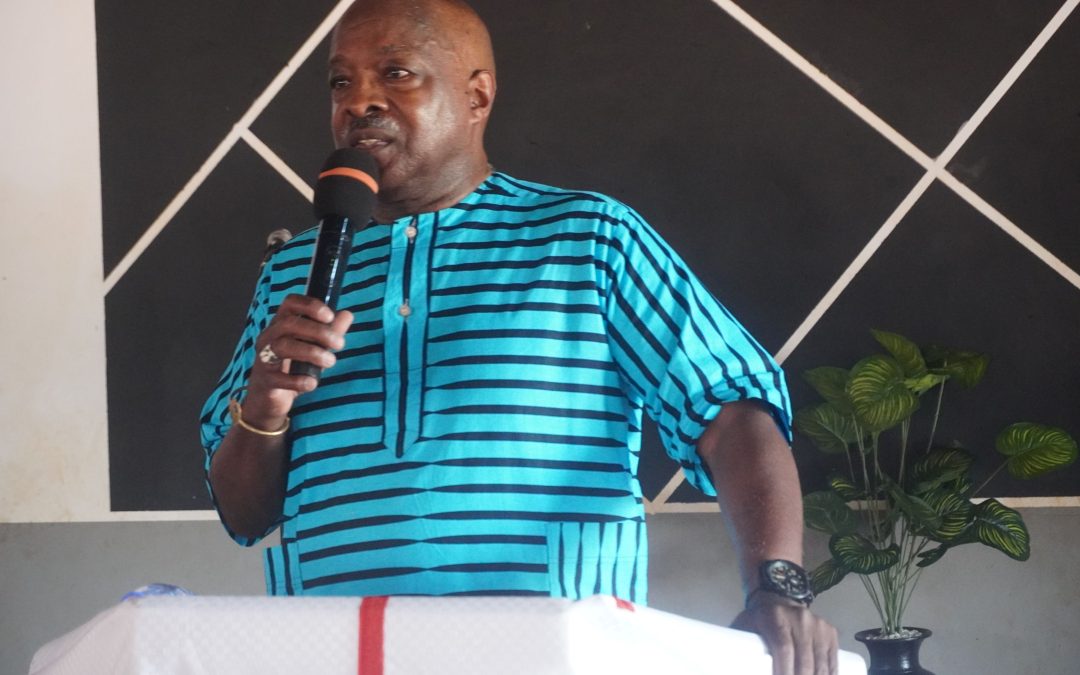
From 26th to 29th August, 2026, more than 450 clergy and lay delegates from Uganda-Sudan-South Sudan Annual conference under the East Africa Episcopal Area of The United Methodist Church gathered at Wanyange Central United Methodist Church in Jinja District, Eastern Uganda, for four days conference. called the East Africa Clergy and Laity Conference, under the theme: “Strengthening Leadership, Discipleship, and Mission for Effective Ministry.” Four days of worship and leadership training.
The turnout of participants across the annual conference was itself a kind of message. Bishop Daniel Wandabula, said in his closing address read in absentia, he appreciated participants for a tremendous courage, saying it reflected “the hunger of our people for spiritual growth, stronger leadership, deeper discipleship, and more effective participation in the mission of Jesus Christ.”
The bishop was not able to attend in person; because of urgent duties that kept him outside of Uganda for the whole time of the conference. But his voice was still present. He sent written remarks to be read to the assembly, and asked his Administrative Assistant, Rev. Godfrey Wamukolo, to welcome the guest and formally open the sessions on his behalf. In His closing message — a wide-ranging word of thanks, challenge, and blessing — was read to the conference by The Host District Superintendent Rev. Isaac Kyambadde.
It was Rev. Kyambadde and the Jinja District who carried the weight of hosting. Organizing lodging, meals, and logistics for a gathering of this size, in the bishop’s own words, “no small responsibility,” and he thanked the district by name for its “commitment, sacrifice, teamwork, and generosity.” Wanyange Central United Methodist Church opened its doors and its congregation to host the crowd, and behind the scenes, the and the Episcopal Office staff handled much of the planning, communication, and coordination that made the four days run smoothly. A cooks’ and catering team fed the gathering meal after meal, and a driver, Mr. Arthur Isubukalu, took on the daily task of getting the visiting teacher safely from place to place — the kind of quiet service the bishop singled out for special thanks.
Teaching the conference was Rev. Dr. Eugene A. Blair, a longtime friend and former professor of Bishop Wandabula, whose relationship with East Africa goes back to a classroom in Meru, Kenya, where he once taught at what is now Kenya Methodist University — with the future bishop among his students. Dr. Blair describes himself as a “minister without borders,” having served in more than twenty African countries in roles ranging from pastor and teacher to counselor, consultant, church planter, business owner, and missionary. He has also led mission trips to Ghana, Senegal, South Africa, Mexico, and Jamaica.
Dr. Blair’s home ministry is First Congregational Church in Grand Ledge, Michigan, though his credentials cross denominational lines: he is ordained in The United Methodist Church, holds a Baptist preaching license, and carries dual standing in the United Church of Christ. His academic achievements includes a Bachelor of Science from Bethel University and Seminary, a Master of Divinity from the Methodist Theological School in Ohio, a Doctor of Ministry from Ecumenical Theological Seminary in Detroit, and further leadership study at Harvard Divinity School. Before entering ministry, he served as a police officer and community organizer. He is also the author of several books, including What Kind of Man Is Joseph and What Kind of Man Are You?
He used his own vacation time to come to Uganda. Bishop Wandabula, in his closing remarks, called it “much more than participation in a conference but an investment in the leadership and future of The United Methodist Church in East Africa,” and thanked Dr. Blair
Dr. Blair lives in Ann Arbor, Michigan, with his wife, Dawn, and two daughters, Nia and Imani.
Sessions opened in Romans 12:9–21, a passage the group returned to throughout the conference as a working framework for leadership, relationships, and conflict: pray without ceasing, show real love and hospitality, and refuse to repay evil with evil.
From that starting point, Dr. Blair moved into the substance of spiritual leadership — what differentiates leading by title from leading by influence, and what it means to lead out of a genuine relationship with God rather than out of position alone. He outlined four core tasks of a spiritual leader: motivating people, helping a community see beyond its present circumstances, helping people find meaning in their work, and building lasting spiritual well-being. Participants also worked through what he called the “four quadrants” of church ministry ; worship, discipleship, fellowship, and outreach — as a framework for keeping a congregation’s life and mission in balance. The conference closed with small-group reflection, where leaders examined their own strengths and sense of calling.
Woven through the four days were more practical themes as well: discipleship, financial and institutional stewardship, conflict resolution, mentoring emerging leaders, and the safeguarding of children and other vulnerable people in church care.
The relevance of this training reaches well beyond the four days in Jinja. Bishop Wandabula pointed to a Church that is growing across East Africa, he said, that demands spiritually mature clergy, better equipped lay leaders, and a stronger working partnership between pastors and the people they serve. This conference was built to meet that need directly, giving clergy and laity a shared vocabulary and practical tools for the work already waiting for them at home.
Bishop Wandabula, and Dr. Blair’s friendship spans decades, back to a seminary classroom in Kenya, and that mentorship is now reaching a new generation of East African leaders. It is a reminder that the Church’s global connection runs as much through personal relationships as through programs and policy.
For Bishop Wandabula, the measure of success was never going to be attendance alone. In his closing charge to the conference, he pressed participants to sit with one question as they traveled home: What will change because I attended this conference? What will change in my walk with Christ, in my leadership, in my congregation, in the relationship between clergy and laity? “If we return home and continue exactly as before,” he told them, “Then we will have missed part of the purpose of this gathering.” He offered five commitments to carry forward: staying rooted in Christ, strengthening discipleship, deepening the clergy laity partnership, leading with integrity and accountability, and taking the Gospel actively into the community.
Participants left with charge rather than a certificate. Bishop Wandabula has asked District Superintendents and lay leaders to carry what they learned back into their own districts, and local churches, and to share it with colleagues who could not attend. He has also asked conference leadership to document the major lessons, recommendations, and commitments from the four days and to build a follow-up plan, so the teaching does not stay in notebooks and conference reports. In the coming months, the Episcopal Area intends to look at ways of evaluating how the training is actually shaping congregations and ministries on the ground.
As the Bishop put it in closing: success here will not be measured by how many people attended, but by the fruit that follows stronger local discipleship, a deeper partnership between clergy and laity, and a new generation of leaders whose reach extends well beyond the room in Jinja.