
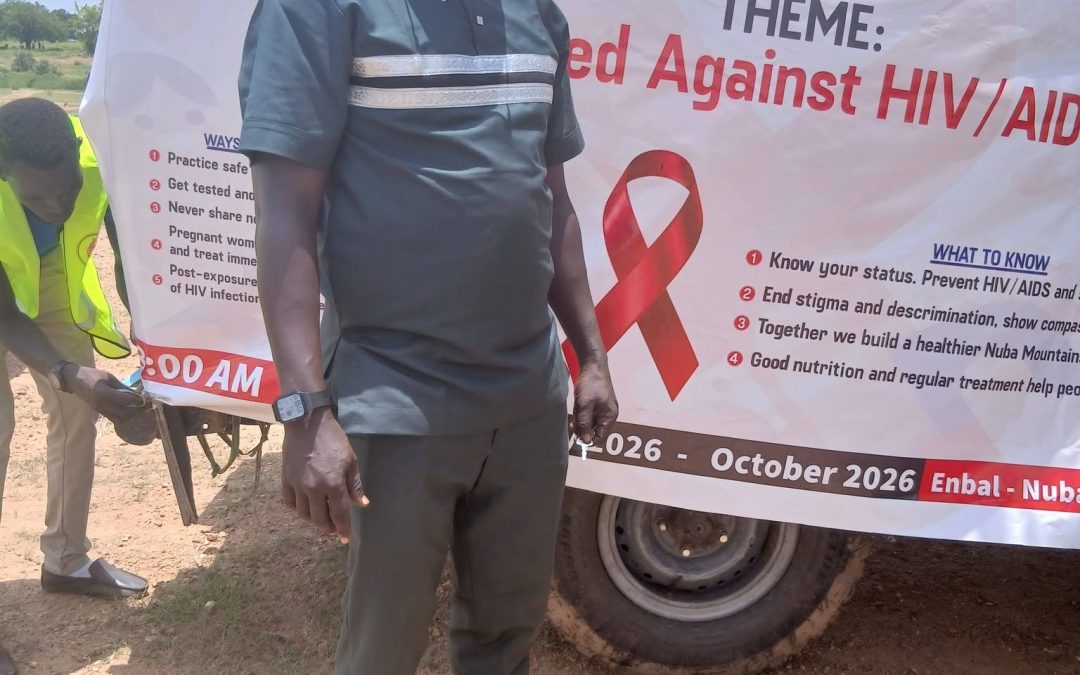
In July 2026, the United Methodist Church in Sudan carried out a one-week campaign called the Nutritional Assistance and Rehabilitation for people living with HIV. The campaign was supported by UMCOR, and its goals were to raise awareness, HIV prevention, and reduce stigma and discrimination against people living with the virus.
The campaign took place in two communities: in an internally displaced persons camp in Andulu main market and Jazira village. More than five thousand people attended, and the campaign was successful.
United Methodist Church members from the Nuba Mountains in Sudan steered the organization of the campaign. Pastors gave spiritual guidance and encouragement, while health workers were invited to give HIV education, counseling, and prevention messages. Dr. Munir Musa volunteered his support alongside Martino Samuel, the campaign manager, who represented the church. Together, they reached youth, women, men, and other vulnerable members of the community.
To reach a wide audience, the team used a variety of methods: teaching, counseling, prayer, home visits, youth meetings, women’s meetings, and open-air campaigns.
Throughout the week, three main messages were shared:
- Do not stigmatize or discriminate against people living with HIV.
- People living with HIV should follow their treatment and medication prescriptions.
- The community should embrace people living with HIV and show them love and compassion.
In line with these messages, church members were urged to avoid stigmatizing and discriminatory language, to support those living with HIV, and to share accurate information about prevention and treatment. Prayers were also offered for individuals and families affected by HIV.
As a result, people took part actively. Awareness grew, and myths and misconceptions about HIV were cleared up. People were encouraged to seek medical support, including HIV testing, counseling, and treatment, at the nearest health facilities with the help of health workers. Participants also committed to supporting community members affected by HIV.
However, the organizers faced some difficulties, including limited resources and a shortage of educational materials and testing kits. The team also realized that many people feared the stigma that would follow if they learned their status.
Despite these challenges, the church kept the campaign moving by opening up discussions, praying, working as a team, mobilizing people, and sharing the available educational materials.
Looking ahead, the church plans to work closely with health providers and to hold regular awareness campaigns, especially for youth and women. For future campaigns, the team says it needs financial support, enough HIV education materials, testing kits, prevention supplies, and partnerships with health organizations and local communities.