Hope Beyond the Smoke: Transforming Lives in Mwakirunge
At the edge of the Mwakirunge dumpsite in Kilifi County, where thick smoke rises from burning waste and the land bears the scars of neglect, a new story is being written. What was once known only for rejection and survival is becoming a testimony of dignity, restoration, and abundant life.
For many years, families in Mwakirunge lived from what others threw away. Mothers labored under the scorching sun, sorting plastic and scrap metal to earn a few coins. Children walked barefoot across mountains of waste, searching for anything that could help their families survive. Hunger, sickness, and exhaustion were daily realities. Hope felt distant.
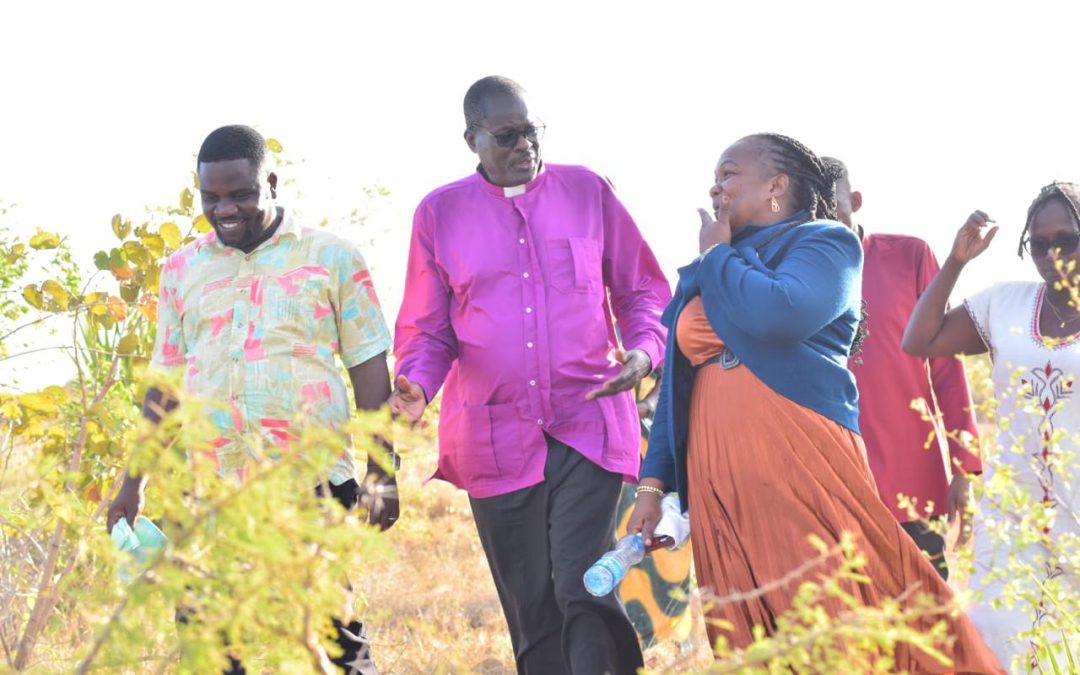
Society often labeled the people of this community as “mahuni” or “muhuni,” names meant to declare them worthless and rejected. Yet even in places the world forgets, God has never been absent.” Bishop Daniel Wandabula declared upon his visit to Mwakirunge”
Located approximately 15–20 kilometers north of Mombasa city center, the Mwakirunge dumpsite receives an estimated 1,200–1,250 tones of solid waste every day, according to reports from local authorities and multiple sources between 2023 and 2026. The environmental pollution caused by the constant combustion of mixed chemical waste exposes residents to serious health risks, including respiratory diseases, waterborne and vector-borne illnesses, skin and eye infections, toxic exposure, long-term chronic conditions, and severe risks for children.
Into this reality, God sent compassion wrapped in obedience.
When Reverend Laura Nyamai of Inspired Word UMC first came to Mwakirunge to explore recycling initiatives, she was deeply touched by the living conditions of the community. She offered a single meal to children at the dumpsite, an act that seemed small, yet carried great obedience. That moment stirred a deeper calling. In 2018, what began as one meal became a weekly feeding program, and soon the ministry grew beyond feeding bodies to feeding souls.
Friends were invited. Volunteers joined. Church members and partners contributed. Children began to gather not only for food, but for worship songs, Bible stories, prayer, and fellowship. The rejected began to feel seen. The forgotten began to feel known. Dignity slowly returned to a place once defined by waste.
During a recent pastoral visit, Reverend Laura reflected on the journey and said:
“This mission center was born out of a simple calling: to be the hands and feet of Christ in this community. Here, we seek to serve the whole person spiritually, physically, and socially. Our vision is to grow this mission into a center of transformation, a place of worship, learning, dignity, and opportunity for generations to come.”
It was in this sacred space among tents, children, mothers, volunteers, and rising hope that the Bishop stood and proclaimed a message that captured the very heartbeat of Mwakirunge:
“God gives life, and life more abundantly.”
Standing before the community, the Bishop brought greetings from his wife and children, from sisters and brothers in the Uganda, Sudan, and South Sudan Annual Conferences, and from partners in the United States of America, especially Nashville. But above all, he brought assurance:
“God has not forgotten you.”
He reminded the people that while many look at Mwakirunge and see only waste, God looks here and sees His beloved children. Where life has been broken by hunger, sickness, poverty, and rejection, Jesus comes and declares, “I am here.”
“You are not abandoned,” he said. “God knows you. God loves you. God calls you by name.”
The Bishop emphasised that God gives life through people. God used Reverend Laura. God uses volunteers. God uses mothers as the carriers and protectors of fragile life. He thanked the mothers of Mwakirunge for nurturing life under impossible conditions and urged leaders to carry this mission with care and faithfulness.
“When children are fed,” he proclaimed, “God is giving life. When prayers are offered, God is releasing hope.”
He challenged the systems that classify and dehumanize people, boldly declaring:
“I may not care what the world calls me, as long as God knows me. I may not care if I miss a meal, as long as I know God will provide. As long as I am a child of God, I am more than a child of a president. I am a child of the Most High.”
Then came a moment of shared joy and vision:
The ministry has already secured funds to purchase 11 acres of land for the future of this mission.
“This work did not begin with money or buildings,” the Bishop said. “It began with a heart that refused to walk away when God’s children were suffering.”
He reminded the community that the Gospel is not about survival alone. Jesus does not promise survival of the fittest; He promises abundant life. The Kingdom of God does not begin after death; it begins here and now.
“What the world throws away,” he declared, “God restores.”
He encouraged parents to pray faithfully for their children and urged children to take their education seriously, sharing testimony that even a barefoot child can rise to leadership when prayer, discipline, and faith walk together.
To the volunteers and leaders, he offered assurance:
“God is using you to give life, an abundant life. The church will continue to stand with you. God is not finished with this community.”
He concluded with a blessing and a charge:
“God builds ministry by rooting us in Christ. This is not our ministry; it is Christ’s ministry. God fills us with life so that we may give life to others. Jesus said, ‘I have come that they may have life, and have it more abundantly.’ May it be so. Amen.”
Hope Beyond the Smoke: Transforming Lives in Mwakirunge